

Disclaimer: This post may contain affiliate links. This means that if you click on the link and purchase an item, I'll make a small commission to keep the lights running. Furthermore, as an Amazon Associate I earn from qualifying purchases. I recommend only products I have personally tried and believe can bring value to you.
It’s a question I used to ask myself almost daily: why does clutter stress me out so much more than it stresses my husband? Usually right after walking into a room, feeling my chest tighten over a mess, and watching him walk straight past that exact same mess without a flicker of reaction.
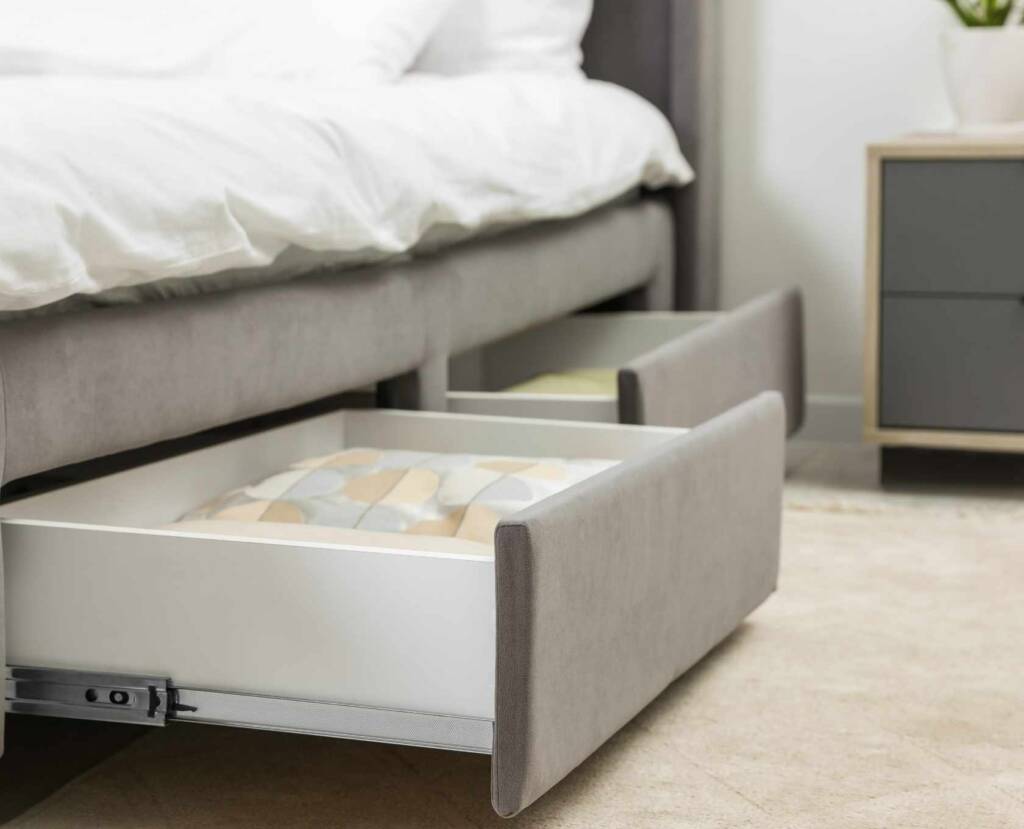
The pile on the chair. The open drawer. The bag that’s been sitting by the door for three days now, daring someone to deal with it. Something in me tightens every single time. He feels absolutely nothing.
You’ve probably told yourself you’re being too sensitive about it. Too nitpicky.
That his ability to live in the same mess without a second thought is actually the more reasonable way to be.
Here’s what I found when I actually went looking for the answer: the problem isn’t in your head.
It’s his brain that’s missing something yours has — and it’s your body that’s paying for it. Physically. Hormonally. Measurably.
I made a full video walking through exactly why clutter stresses women out more than men, biologically.
Watch it here, or keep reading below for the full breakdown.
What changed everything for me wasn’t a new cleaning routine.
It was three specific bodies of research on clutter and women that completely rewired how I understood my own reaction to mess — and my husband’s total lack of one.
My Husband’s Open-Drawer Trail Through Our House
My husband has a very specific talent. Wherever he goes in our home, he leaves a trail behind him.
Not a trail of destruction, exactly. More like evidence. Evidence that he was here, that he found what he needed, and that he moved on with his life completely at peace with the open drawer he left in his wake.
It’s very Lord of the Rings, honestly — like when Pippin drops his brooch in The Two Towers so Aragorn can track him. That’s my husband, except with drawers instead of brooches, and no orcs involved. Every open drawer in our house is basically a breadcrumb. Kitchen, bathroom, bedroom — I can map his entire afternoon just from what he left open behind him.
I didn’t ask for this map. Nobody consulted me on it. But here we are.
And every time I’d come across one of those open drawers, something would tighten in me — this small, specific spike of irritation. Worse, every time I tried to bring it up, he’d react like I was telling him the sky wasn’t blue. Genuinely baffled. Like the concept didn’t compute.
So the cycle would start. I’d get frustrated. He’d get confused. I’d get more frustrated that he was confused. He’d get defensive. And suddenly we were both just reacting to each other instead of talking about what was actually happening.
(If your partner has a version of this — open drawers, abandoned mugs, a trail of socks — tell me in the comments. I want to believe I’m not the only one.)
It Was Never Really About the Drawers
Here’s the thing, though: it was never really about the drawers.
When I actually went looking for the science behind this ‘clutter stress’, I finally understood what was happening — in my mind and in my body — and it changed how I saw the whole situation. Not just the mess. Me.
What Your Cortisol Is Doing That His Isn’t
In 2010, researchers from USC and UCLA did something that hadn’t really been attempted before: they moved into people’s homes.
Thirty dual-income couples in Los Angeles agreed to film their own homes, narrating what they saw room by room. While they did it, the researchers collected saliva samples throughout the day to track cortisol — the stress hormone, your body’s built-in alarm system.
A healthy cortisol curve looks like this: high in the morning, dropping steadily through the day, and falling significantly by evening so your body can actually rest. That drop is the recovery. It’s the system working the way it’s supposed to.
The problem is when the alarm doesn’t go off. When it just stays on quietly, signaling all day that something is unfinished, something is wrong.
That’s what the researchers found in the women who described their homes as chaotic or cluttered: their cortisol stayed elevated all day. It never dropped, not even by evening. Their bodies weren’t recovering.
The men in the same homes? Largely unaffected. In the researchers’ own words, the results for husbands were “largely null.” Same house, same clutter, completely different biological response.
This was one study with a relatively small sample size, so it’s worth holding loosely on its own — but it lines up with a much larger body of research on stress and environment, and it matches what a lot of us already feel without being able to name it. This isn’t about being sensitive. It’s your body reacting exactly the way it’s designed to.
What the cortisol study doesn’t tell you is why the gap exists in the first place. For that, you need the next two pieces.
The Invisible Job You Never Applied For
A qualitative study out of the University of Melbourne and the University of Bath set out to measure something that’s rarely measured: cognitive household labor. Not the physical work of running a home, but the thinking that happens before any of it — noticing the faucet is leaking, remembering the doctor’s appointment, working out who does what, when, and how. All of it running constantly in the background. Invisible. Unacknowledged.
The researchers found that women carried 71% of this cognitive load.
Here’s the part that actually stopped me: that number doesn’t move when women earn more, work more, or hire more help. The thinking work sticks. The researchers have a name for it — gendered cognitive stickiness.
That particular study focused on parents, so adjust the number if that’s not your situation. But the broader pattern — invisible cognitive work landing disproportionately on women — shows up across plenty of research, parenting status aside.
So when you walk into a room and see clutter, your brain doesn’t just register “mess.” It opens a file. Who left this here? Does it need to go back somewhere? What else needs dealing with? When can I get to it? How long will it take?
Your brain isn’t looking at a drawer. It’s adding to a list you never agreed to keep. His brain sees a drawer. Yours sees an open task.
Why Open Loops Don’t Let You Rest (The Zeigarnik Effect)
In 1927, a psychologist named Bluma Zeigarnik noticed something strange at a restaurant. The waiter could recall every order at every table with perfect precision — until the bill was paid. The moment the task was complete, the order vanished from his memory entirely.
She took it back to the lab.
What she found: unfinished tasks stay active in working memory. Your brain keeps a file open on them, quietly pulling at your attention even when you’re not looking directly at them. Finished tasks get filed away — the loop closes. Unfinished ones stay open. Indefinitely.
It doesn’t hit everyone the same way or at the same intensity. But if you’re someone who’s lain awake replaying an unfinished to-do list, you probably already know which one you are.
Putting the Three Pieces Together
Here’s what happens when you stack all three: a brain wired by conditioning and the invisible weight of cognitive labor processes clutter as an unfinished task. Every drawer, every pile, every bag from a trip five months ago is an open loop that refuses to close — and your cortisol stays elevated because of it.
Three separate bodies of research, all pointing at the same thing: this isn’t a personality flaw. It’s biology.
Understanding that changed something for me. Now, when I feel that low hum of stress around the mess, I can look at it almost dispassionately — like I can pick the feeling up and examine it instead of being inside it. Oh — this is a cortisol spike. Interesting. This is an open file.
What dissolved first wasn’t the stress about the clutter. It was the stress about being stressed — the why am I like this, why can’t I just let it go, what’s wrong with me layer. Once that went, I could respond instead of react. I see the open drawer. I take a breath. I name it. This is a cortisol spike. This is an open file. I know what this is. And then I decide what to do with it, instead of drowning in it.
What Happened When I Showed My Husband the Study
I showed him the research. His first reaction was genuine amusement — about 30% sincere, 70% politely unconvinced, which, fair.
But something shifted the following week, once it had a chance to marinate. Because this wasn’t me saying “you don’t care about the house” — it was a peer-reviewed study, and that’s a lot harder to argue with.
He got more aware. I want to say “considerate,” but it was closer to newly informed. Now, when there’s too much on the dining table, he claims he’s stressed by it too (real slow clap).
Three Things You Can Actually Do With This
Understanding the science is only half of it. Here’s what to do with it:
1. Name it when it happens. Next time you walk into a messy space and feel your chest tighten, don’t immediately try to fix it. Name it first. My cortisol is spiking. This is an open file. This is a stress response. That single act of naming is the gap between reacting and responding — the moment you label what’s happening in your body, it starts to lose its grip.
2. Have the conversation with the science, not with your frustration. If clutter is a recurring friction point with your partner, skip the version where you explain why the mess bothers you — that one tends to land as a complaint. Instead, try: “I read something interesting,” and share the study. Let the science do what you’ve been exhausting yourself trying to do. It’s not about winning the argument. It’s about giving his brain a logical framework to work with.
3. Pick one open file and close it. The Zeigarnik effect works both ways — every open file is stress, every closed file is relief. Pick the one thing your brain keeps circling back to. That chair. That pile. That corner. Close just that loop. Not because tidy is the goal, but because your brain has been carrying that file, and you deserve to feel some of the relief that comes from setting it down.
If You Need Help Closing One Loop Today
I put together a free guide for exactly this moment. It’s called Trash Bag Therapy — a 20-minute, zero-thinking-required system that gets you visible results in about the time it takes to watch an episode of something.
It’s genuinely one of the fastest ways to close that mental loop you’ve been carrying around all day.
So Now You Know
Your brain doesn’t just see a pile of clothes. It immediately starts processing it, cataloging it, adding it to a list you never wanted to keep. The research tells us what’s happening. It doesn’t tell us what that low hum of stress is quietly costing us, day after day.
That’s exactly what the next post in this series is about — the quiet cost of clutter you’re already paying without realizing it. (Coming soon — I’ll link it here once it’s live.)