
Disclaimer: This post may contain affiliate links. This means that if you click on the link and purchase an item, I'll make a small commission to keep the lights running. Furthermore, as an Amazon Associate I earn from qualifying purchases. I recommend only products I have personally tried and believe can bring value to you.
Most people think decluttering means living in a bare white room with one plant and a linen throw. It doesn’t. And that assumption — that decluttering and minimalism are the same thing — is exactly what’s been stopping you from starting.
Decluttering has nothing to do with owning less or becoming a minimalist. In this video, I explain what decluttering actually is, why the internet made it look so much harder than it needs to be, and what to do instead — if you want a home that feels calmer without having to become a different kind of person to get there.
Hey, I’m Aastha. I’ve been writing about calm, clutter, and the psychology behind why letting go is so hard, over at Eye of the Calm, where I have an audience of over 30,000 women. The single thing I hear most often is some version of: “I want my home to feel less stressful, but I’m not ready to throw everything out.”
If that’s you, keep reading. Because this is the post that changes how you think about everything you own.
This is the third post in a series on clutter and what it’s quietly doing to you. If you’re new here, the first two are worth reading first — Why clutter stresses you out more than it stresses your husband and the This post picks up where those left off.
Where the Confusion Between Decluttering and Minimalism Started
To understand why we mixed these two things up, you have to go back to where most people learned about decluttering.
The Marie Kondo era. The minimalism movement. The 100-items-or-fewer challenges. The YouTube channels that showed dramatic before-and-afters of people getting rid of literally everything. They all pointed in the same direction: own less, have less, be less attached to stuff.
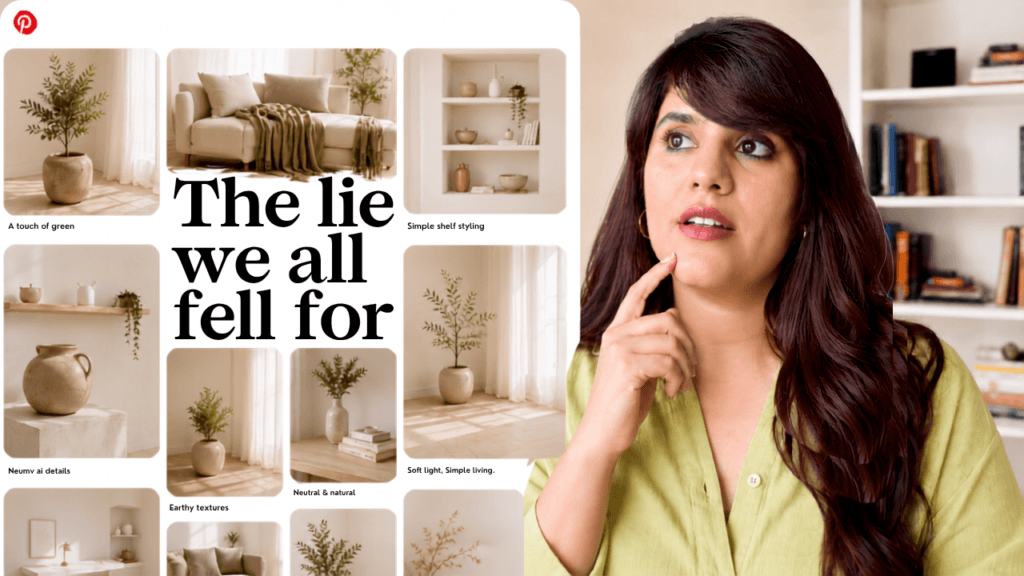
None of that is wrong, exactly. But somewhere along the way it attached a very specific aesthetic to the concept of decluttering. And that aesthetic — the pampas grass vase, the all-white room, the five-dress wardrobe — intimidated a lot of women into never starting. Maybe the all-white room wasn’t what you wanted. Maybe your partner certainly didn’t want it. Maybe it just felt like such an enormous overhaul that opening a cupboard and doing nothing seemed like the more rational choice.
Here’s the thing: that all-white room with the pampas grass vase? That’s not decluttering. That’s what minimalism looks like on Pinterest.
Somewhere along the way, someone mixed these two things up. And now there’s an entire generation of perfectly intelligent women who open their cupboards and do nothing — because they feel like they need a bare white room and only five dresses before they’re even allowed to begin.
You don’t need less stuff. What you need is clarity about the stuff you already have.
What Your Stuff Is Actually Telling You
Before you can declutter anything, you need to understand the story your stuff is trying to tell you. And there is real psychological research behind why this matters.
A researcher named Russell Belk spent years studying why we feel so connected to our possessions. His work on what he called the extended self showed that we don’t just own things — we incorporate them into our sense of who we are. Your objects aren’t just objects. They’re part of how you define yourself.
Which means letting go of something doesn’t just feel like throwing something out. It feels like erasing a part of you. And that’s why it’s hard — not because you’re bad at decluttering, but because your brain is doing exactly what it’s built to do.
Once you actually start listening to the story your stuff is telling you, though, things start to change.
Clutter Is Not a Pile of Too Much Stuff — It’s a Mismatch
Here’s the reframe that changes everything: clutter is not too much stuff.
Clutter is a mismatch. It’s the stuff that belongs to a version of you that no longer exists, sitting in your present life, taking up space, pretending it fits.
Think about it. The things you can never throw away aren’t the things you use every day. They’re the things tied to a version of you — the woman you once were, the woman you thought you would become, the woman other people expected you to be.
Let me explain this the only way I know how to explain anything: with a Batman analogy. (I’m aware of what this says about me.)
At any point in your life, there are really three versions of you in the running:
Past You is Tim Burton’s Batman.
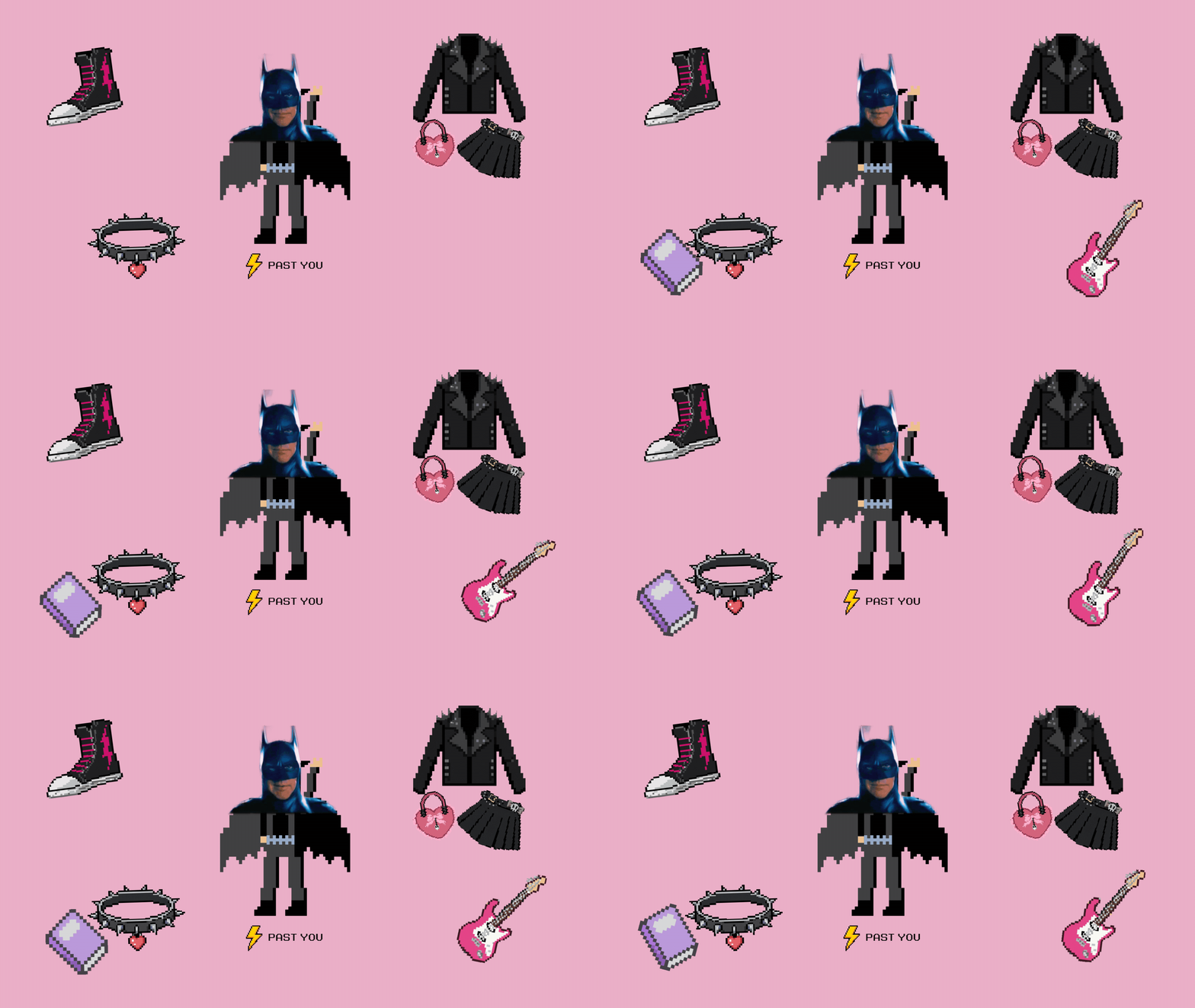
Theatrical, a little gothic, a little dramatic, very into a specific aesthetic that felt exactly right at the time. Past You had a flamboyant, slightly questionable sense of style, but you owned the outfits, the hobbies, and the bookshelf to match.
Aspirational You is Nolan’s Batman

Suave, brooding, has her life together in a very serious, very composed way. Aspirational You buys the gritty black Chelsea boots, the protein powder, the five-year planner. For the version of you who hasn’t shown up yet. Maybe never will.
Present You is Matt Reeves’ Batman

Still figuring it out. Asking real questions instead of performing an answer. Not as polished as Nolan’s version, not as theatrical as Burton’s, but finally, honestly, you.
Here’s the problem. Most of our homes are like wardrobes built for all three Batmans at once. Burton’s cape is lying next to Nolan’s boots, is lying next to whatever eyeliner Reeves’ Batman wears. And you are standing in the middle of all this wondering why getting dressed in the morning feels like an identity crisis.
None of that is clutter because you have too much of it. It’s clutter because it belongs to Batmans that are not you.
The Quiet Cost of Living With the Wrong Versions of Yourself
Every day that stuff sits in your home, you walk past evidence of who you were and who you wanted to be. And your brain quietly registers the gap between those versions and the one you’re actually living right now.
That gap has a cost — and it’s not abstract.
Your brain at any given moment is trying to hold a coherent story about who you are. We need internal consistency: a sense that who we are and how we live roughly match up. When your home is full of objects that keep telling different stories — the corporate wardrobe for the job you left, the aspirational kitchen equipment for the cook you haven’t become, the pile of books you feel guilty about not having read — your brain can’t fully commit to your present self. It’s too busy surrounded by artifacts that belong to someone else.
Psychologists call this cognitive dissonance: holding two contradictory things as true at the same time. “I am who I am now.” “I’m keeping the stuff for who I was.” That dissonance costs energy every single day, quietly.
Research on clutter and psychological wellbeing confirms that the emotional weight of clutter — specifically the stuff tied to regret, aspiration, and identity — is what drives the strongest link between the things you own and how you feel. It’s not the volume of stuff. It’s the emotional charge attached to it.
Which is exactly why the Pinterest version of minimalism isn’t the fix. That version just tells you to reduce volume on the surface, without ever addressing the actual cause. It treats the symptom, not the source.
What You Actually Need: Three Questions, Not a Personality Transplant
You don’t need a whole declutter day. You don’t need a new aesthetic or a complete overhaul. You just need to ask three questions.
Pick up any object that’s been sitting there for months — the things you keep thinking about decluttering and then putting back. Run each one through these three questions.
Question one: Does this belong to who I am now, or who I was?
Not “could I use this someday.” Not “I liked this once.” Who you are today — does this thing fit the person you are right now? This isn’t a judgment on the old version of you. She was real. She mattered. But if the object belongs to her and not to you, it’s not your burden to keep carrying.
Question two: If I didn’t already own this, would I choose it today?
You feel bad about letting it go because you spent money on it, or someone gifted it to you, or it feels wasteful. But the money is already spent, whether it’s in your cupboard or not. The question isn’t about the past. If you walked into a shop and saw it, would you bring it home today? If your honest answer is no, that’s your answer.
Question three: What version of you is keeping this alive?
This is the quieter one. It’s not for every object — it’s for the ones you genuinely can’t move on from. Pick up that object and ask yourself honestly: what is the story this object is telling me? Is it a story I’m still living?
I have a box of paints sitting in my house right now. I bought it five months ago, completely convinced I was going to get into painting. I’ve used it four times. It’s still sitting there. And I’m still not ready to admit that I might not be that person anymore.
So I’m giving myself time. Some grace. A concrete timeline — say, six months. If it still doesn’t feel like it belongs to me by then, I’ll let it go.
Here’s what’s different now, though: I’m not afraid to ask the tough questions anymore. And to me, that’s progress.
You Are Not Being Asked to Stop Caring About Things
I want to say this clearly, because I don’t think it gets said enough in the decluttering vs minimalism conversation.
You are not being asked to stop caring about things. Or being asked to become someone who owns very little.
Neither are you being asked to give up the part of you that’s sentimental, complicated, or still figuring it out.
You are only being asked one thing: to stop giving shelf space to versions of you you’ve already grown out of.
I have a shelf in my parents’ home stacked with notebooks I filled from about age 10. School notes. Diary entries. Thoughts I had at 15 that I was absolutely convinced were profound. I couldn’t let them go. My mother couldn’t let them go. Those notebooks belonged to a version of me that was very real.
The notebooks were never the problem. The problem was that I thought letting go of them meant letting go of her.
It doesn’t. She’s already in me. She doesn’t need a shelf.
If You Need Help Letting Something Go
For the specific items you can’t move on from — the ones where none of these questions are enough — I built a free tool for this exact moment.
It’s called Let It Go, and it lives inside my free Trash Bag Therapy app. It asks you gentle, honest questions and takes you from “I can’t decide” to an actual answer, item by item.
Access the Let It Go tool free →
So Now You Know What Decluttering Actually Is
It’s not about having less stuff. It’s about making more room for who you are right now.
Asking the tough questions about the things you own, being honest with yourself, and gently letting them go.
Decluttering without minimalism isn’t a compromise. It’s the whole point.
But you might be thinking: okay, I get it — I understand all of this — but I still don’t know where to actually start. Every time I try, I freeze. I walk into a room, look at the mess, and do nothing.
There’s an actual science-based reason that happens, and specific ways to make it stop. That’s what the next post in this series covers. (Coming soon — I’ll link it here once it’s live.)