
Disclaimer: This post may contain affiliate links. This means that if you click on the link and purchase an item, I'll make a small commission to keep the lights running. Furthermore, as an Amazon Associate I earn from qualifying purchases. I recommend only products I have personally tried and believe can bring value to you.
For years, I thought the answer to how to maximize closet space was to get a bigger closet. Mine always seemed too small, and every attempt to organize it unravelled within a few months.
What I hadn’t noticed was how much space I was losing inside unstable clothes piles, bulky hangers and drawers I couldn’t properly use. There was room. My storage system was making it hard to see.
The changes that helped weren’t about folding everything beautifully or buying every organizer on the internet. They were about finding the particular spots where my closet wasn’t working, then making those spots easier to use.
Here are the seven changes I made, and how to decide which ones might help yours.
I’m Aastha, and I share practical ways to create a calmer home without expecting you to become a different person first. This is what worked in my own closet. If you need to clear out clothes before reorganizing, start with my closet decluttering guide.
This post contains affiliate links. If you buy through them, I may earn a commission at no additional cost to you. As an Amazon Associate I earn from qualifying purchases.
1. Replace toppling piles with file-style organizer bins
The first place I was wasting space was inside the clothes piles themselves.
I used to stack clothes on top of one another. But I’m not a particularly neat folder, so the stacks were bulkier than they needed to be. Pulling a T-shirt from the middle would topple the pile and mix it with the one beside it.
Eventually, I stopped trying to repair the piles. Finding anything became a small excavation.
I switched to file-style clothes organizer bins with individual compartments. Instead of aiming for perfect folds, I roll my clothes and slot them in vertically. For thinner T-shirts, I can sometimes fit two or three in one compartment.
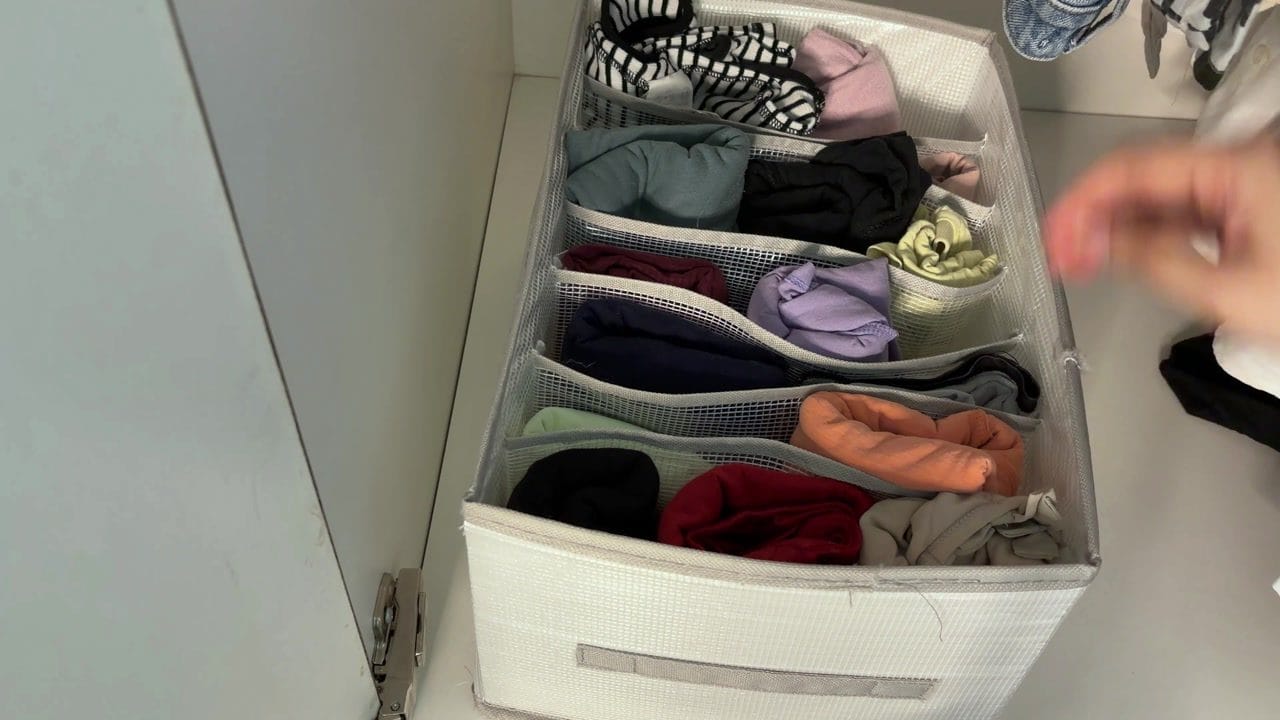
The dividers keep the clothes separate, so taking one thing out doesn’t disturb everything else. I can see what’s there and put it back without rebuilding a pile.
This change helped me most. If your shelves keep turning into mixed-up stacks, start here before adding more storage elsewhere.
2. Use empty vertical space with stackable slide-out drawers
Some closets have tall shelves with a large unused gap above the clothes. Mine had plenty of hanging space, but too few accessible shelves.
I added stackable slide-out drawers to create more levels of storage. They fit on top of one another, letting me use height that wasn’t doing much before.
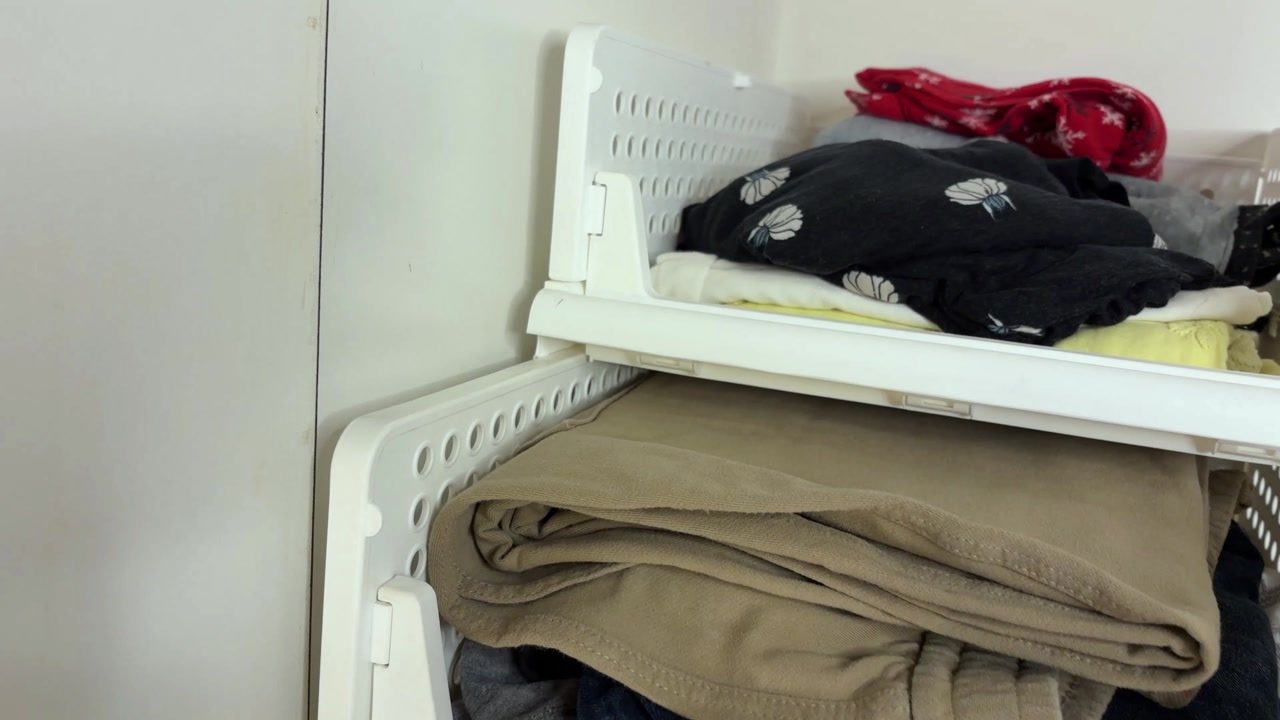
What I like most is that the drawers pull out. I don’t have to reach behind the clothes at the front to find something at the back. I use them for T-shirts and smaller dresses that I can roll up.
Before buying, check the width, depth and height of your available space, including room for the drawer to slide out. The point is to make your clothes accessible, not squeeze in a tower you can barely open.
3. Put bins below shorter hanging clothes
Look underneath your hanging shirts and other shorter pieces. Is there a gap between their hems and the shelf below?
I started putting bins in that space. In the past, I used baskets for belts and accessories. Now I keep a file-style clothes organizer there.
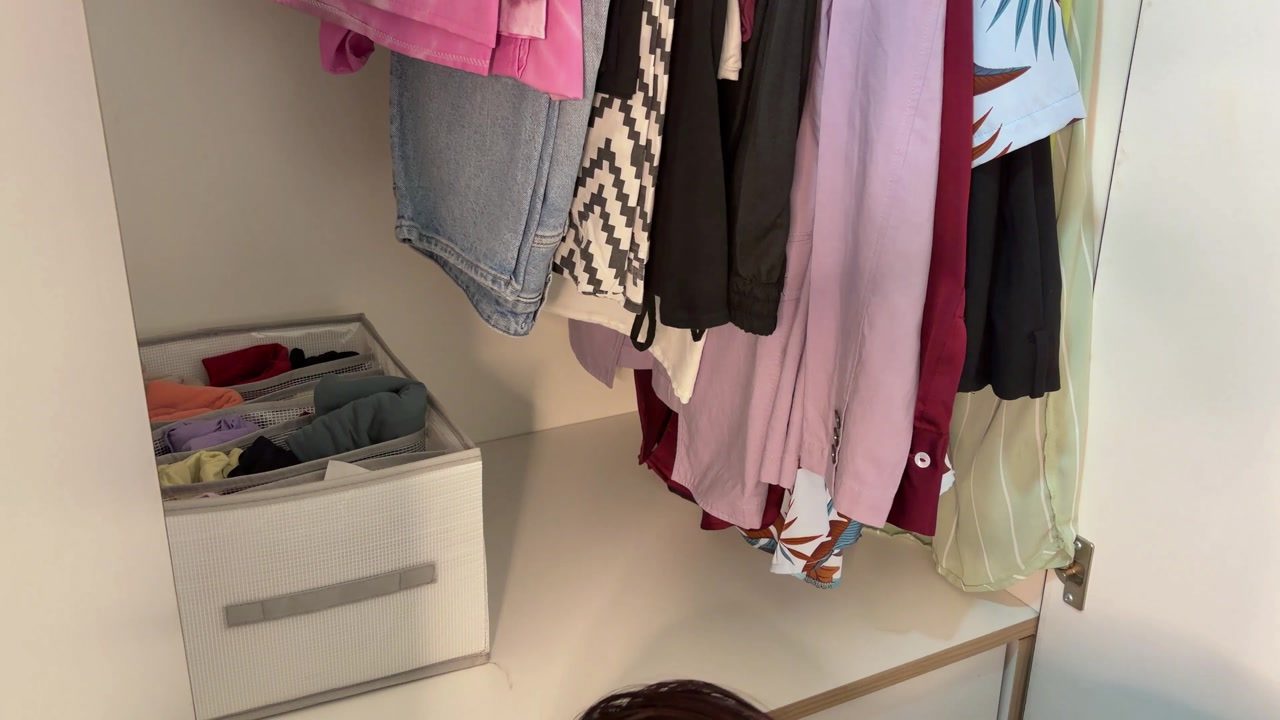
It gives me another easy-to-reach storage spot. I can pull out the whole bin, take it to the bed, get what I need and put it back. That also frees the lower, less accessible shelves for things I don’t wear often.
This works only where there’s enough clearance. Your longer dresses still need their hanging space, and a bin shouldn’t crush the clothes above it.
If you want more options for unused corners, I’ve shared other hidden closet storage spots you can check in your own wardrobe.
4. Swap bulky hangers for slim velvet ones
My old wooden hangers were taking up a surprising amount of room on the rod. I’ve gradually been replacing them with slim velvet hangers.
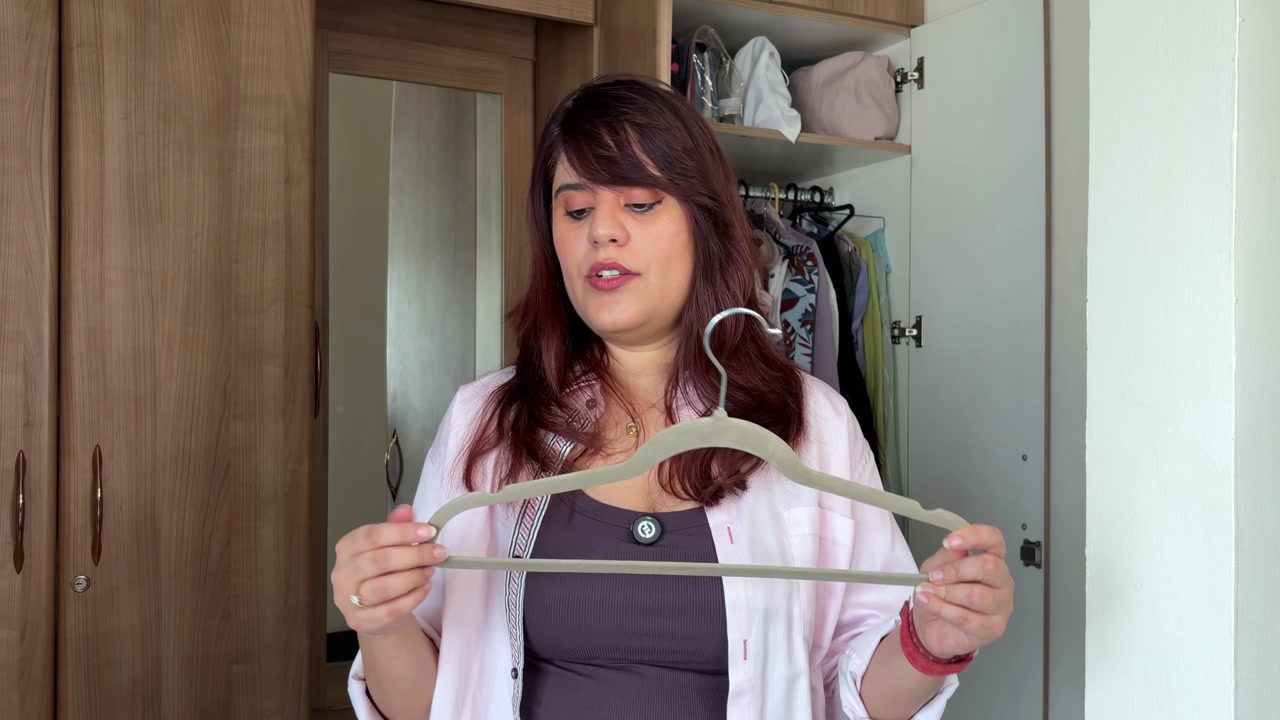
Their thinner profile leaves more room for clothes beside one another. The non-slip surface also helps with dresses that seem to have a moral obligation to fall off their hangers.
Fewer clothes on the closet floor is a nice bonus.
I haven’t replaced every hanger. I still use some older steel and aluminium ones because they work, and I don’t want them to go to waste. Start with the bulky hangers that are actually causing crowding; you don’t need a matching set for this to help.
5. Divide drawers so small clothes stay separate
My underwear drawer used to have the same problem as my shelves: piles that slowly turned into one mixed-up heap.
Adding compartmented drawer organizers gave each small item a separate spot. Now I can take something out without disturbing the rest.
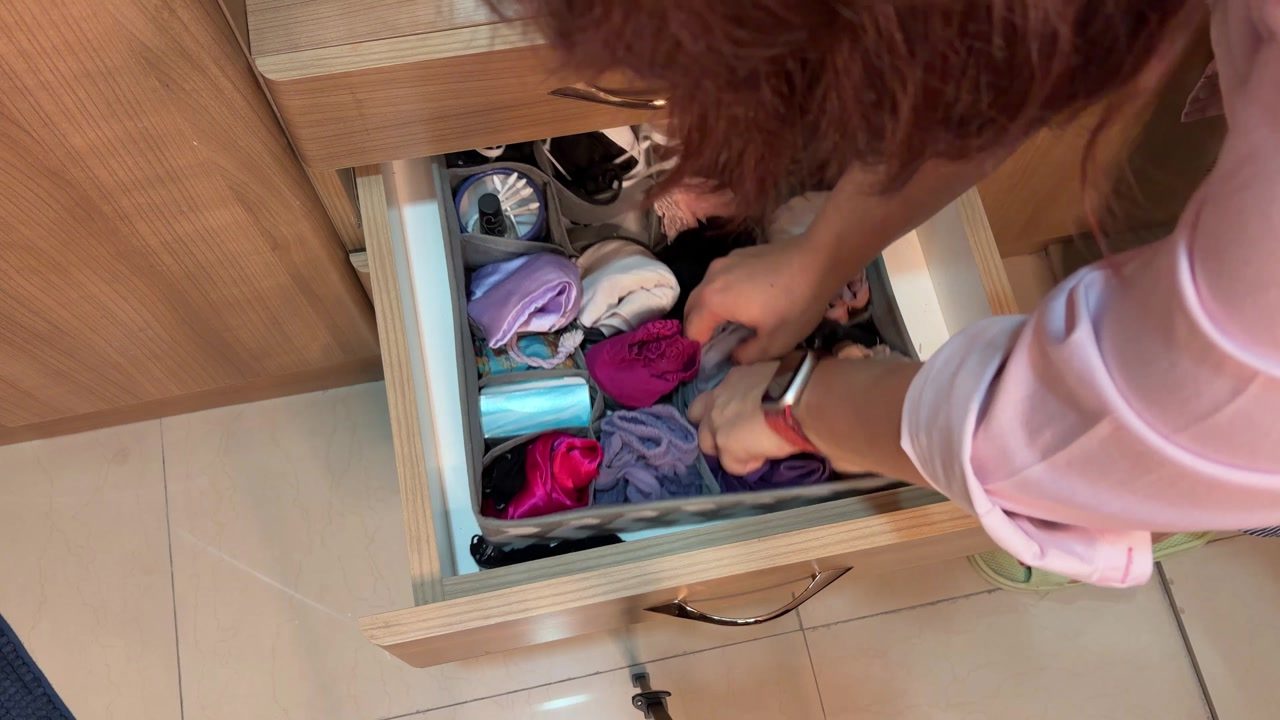
The organizers also help me use the drawer’s depth. Items at the back stay visible in their own compartments instead of disappearing underneath everything else.
If you keep rummaging through a drawer, look at what’s getting mixed together. A divider that suits those items may help more than a larger drawer would.
6. Replace bulky jewellery boxes with fitted trays
I used to keep jewellery in pouches and boxes. They took over one drawer, then spilled into a second. Finding one necklace could mean opening a box inside another box, then untangling whatever I found.
I switched to felt jewellery trays that fit inside a drawer. The small sections keep earrings separate, the ring rows hold rings, and larger compartments work for bracelets and watches.
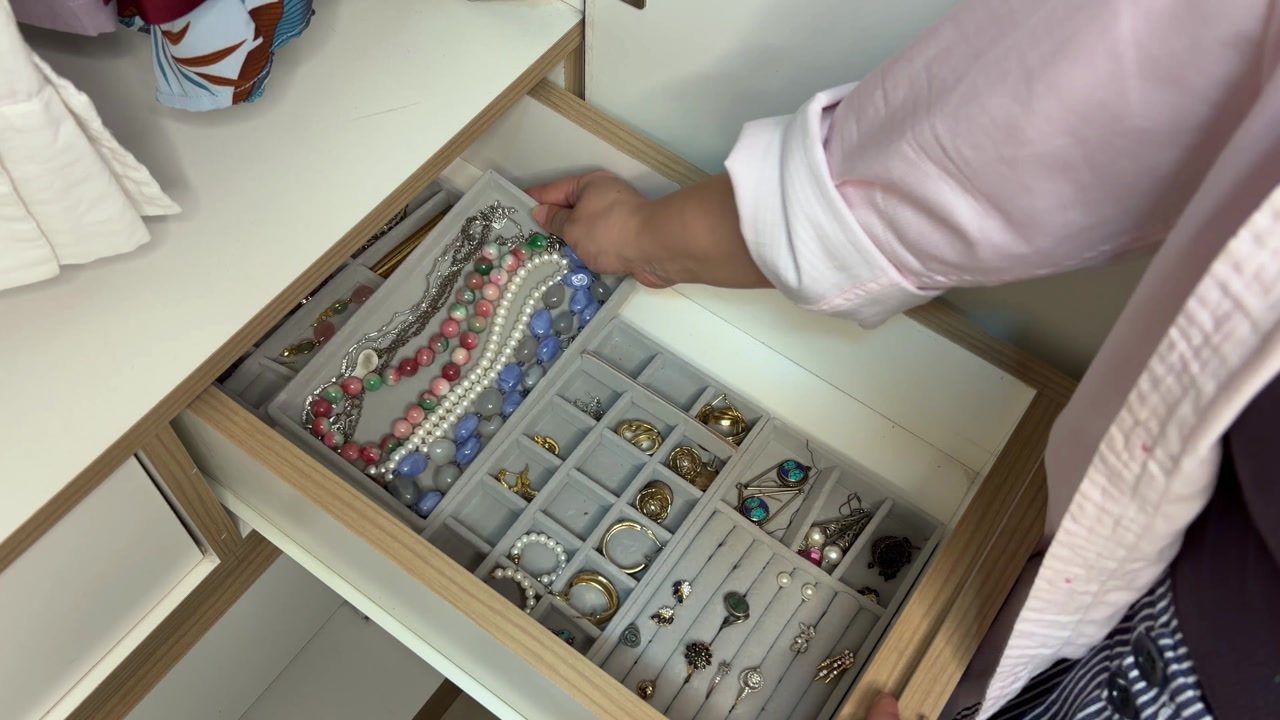
My everyday jewellery is visible at a glance, and I no longer need a second drawer for all those bulky containers.
The trays can also be lifted out. Some can stack if your drawer has enough height, although the upper tray will need moving to reach the lower one. For daily pieces, easy access matters more than packing in the maximum possible amount.
7. Give everyday clothes the easiest-to-reach space
The final change wasn’t an organizer. It was deciding which clothes deserved the most accessible parts of my closet.
I moved out-of-season pieces elsewhere, using under-bed storage or a spare cupboard. If you have suitable room beneath your bed, under-bed organizers can help keep seasonal clothing together.
Then I arranged the clothes still in my closet by how often I wear them. My everyday T-shirts, shirts and trousers are easy to reach. Fancy dresses and sparkly tops live in bins on the bottom shelf because I don’t need them every morning.
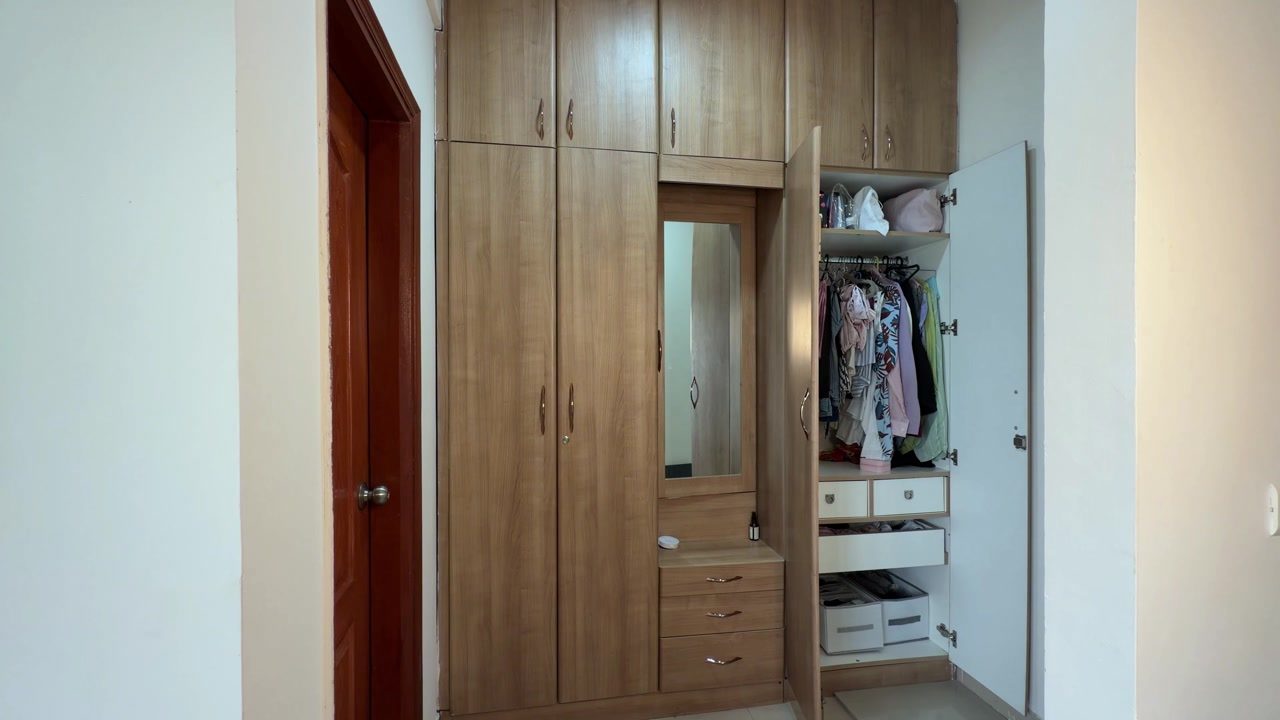
You may not have a spare cupboard, and that’s fine. Even within one closet, putting daily clothes at the front and occasional pieces in less convenient spots can make it easier to use.
Your most accessible shelf is valuable space. Give it to the clothes you actually keep reaching for.
How to maximize closet space without buying every organizer
The most useful change starts with identifying where your closet is failing you.
Are piles collapsing? Is there empty height above a shelf? Are clothes slipping off hangers? Is jewellery taking up a whole drawer because of its packaging?
Choose the solution that addresses that particular problem. You may need one bin or a set of drawer dividers. You may simply need to move the clothes you rarely wear.
For me, the extra space and the lasting tidiness came from the same thing: making clothes easier to take out and put back. Storage that needs perfect folding and constant repairs wasn’t going to work for the person actually using my closet.
If you want help building routines around the rest of your home, the Choose Calm System includes a decluttering plan, reset tools and maintenance systems.
And if the same closet mess keeps returning, read my guide to keeping your closet tidy. More storage helps most when it works with the way you already move, dress and put things away.