
Disclaimer: This post may contain affiliate links. This means that if you click on the link and purchase an item, I'll make a small commission to keep the lights running. Furthermore, as an Amazon Associate I earn from qualifying purchases. I recommend only products I have personally tried and believe can bring value to you.
One busy week, and suddenly the laundry has formed a committee, the fridge is empty, and every routine needs rescuing. You weren’t trying to abandon your entire life. You just had a few full days.
This is why I started thinking about low-maintenance living. I wanted a life that could keep working when I was tired or busy, instead of needing a complete rebuild every time my energy dipped.
These five changes helped me through ten-hour corporate workdays and, later, building my business and YouTube channel. They’re ways to reduce the decisions and invisible work attached to ordinary life, while keeping room for the things I actually want in it.
What does low-maintenance living look like?
For me, it means fewer everyday things need to be decided, redesigned, postponed or rescued whenever I get busy. There are still meals to make and things to put away. The difference is that I don’t have to start from a blank page each time.
A coffee machine comes with beans, cleaning and upkeep. A subscription comes with renewals, passwords and the occasional detective investigation into what is still charging your card. Even helpful things can hand us another little job.
Before adding another productivity trick, I try to notice how much of that work I can remove or simplify. Here are the changes that have helped me.
1. Give recurring decisions a default
Some decisions deserve proper thought. What to eat on an ordinary Tuesday doesn’t need to become a fresh creative assignment every afternoon.
My husband and I have a few default lunches. We worked out the calories and macros for those meals once, and now we repeat and alternate them. That’s our setup, rather than a meal plan everyone needs to follow. The useful part is having familiar options ready when neither of us wants to reopen the lunch debate.

We’ve also made our coffee and milk orders recurring, so we don’t have to keep tracking and reordering things we know we’ll need. In my business, I’ve automated recurring Pinterest research and social media work for the same reason: the task was coming around again anyway.
Look for one question that keeps returning. Can it have a simple default? You can still change your mind. A default just gives the tired version of you somewhere sensible to start.
2. Count the maintenance tail before saying yes
The exciting part of buying something is usually very easy to picture. The cleaning, storing, charging, renewing and eventually getting rid of it? Somehow those details don’t make it into the little daydream.
Moving apartments made this very real for me. Every object, even the small ones, needed packing, carrying, unpacking and a new place to live. I’d paid for the thing ages ago. The work attached to it was still arriving.
Now I try to ask two questions: Do I want this? And do I also want the ongoing job that comes with it?
That applies to commitments too. A recurring plan can come with a surprising amount of coordinating. Some things are absolutely worth the work. I just want to see that work before saying yes, while I still have a choice about taking it on.
If the things you already own are asking too much of you, my three ways to reduce friction at home are a useful place to look next. Sometimes a different storage choice removes work without requiring a big clear-out.
3. Build a smaller version of important routines
I used to think a routine counted only if I did the full version. Unfortunately, a routine designed around my best day wasn’t especially helpful on the days when I had the energy of a nearly empty remote-control battery.
So I started giving important routines a smaller version: a floor that keeps the thread alive when the full routine isn’t happening.
For example, I used to aim for my daily walking in two forty-five-minute blocks. Those were substantial chunks of time, and I kept slipping up. Now I break walking into ten- to fifteen-minute bursts. My personal target is still 10,000 steps, with 7,000 as the floor I try for when I don’t reach it. Those are my own goals, not a prescription; the change was making the routine fit into my day more easily.

I do a similar thing with clutter. Rather than always waiting for a long weekend session, I clear things from my path as I move through the house. Something doesn’t belong there? Something needs to go in the rubbish? I deal with that little bit on the way.
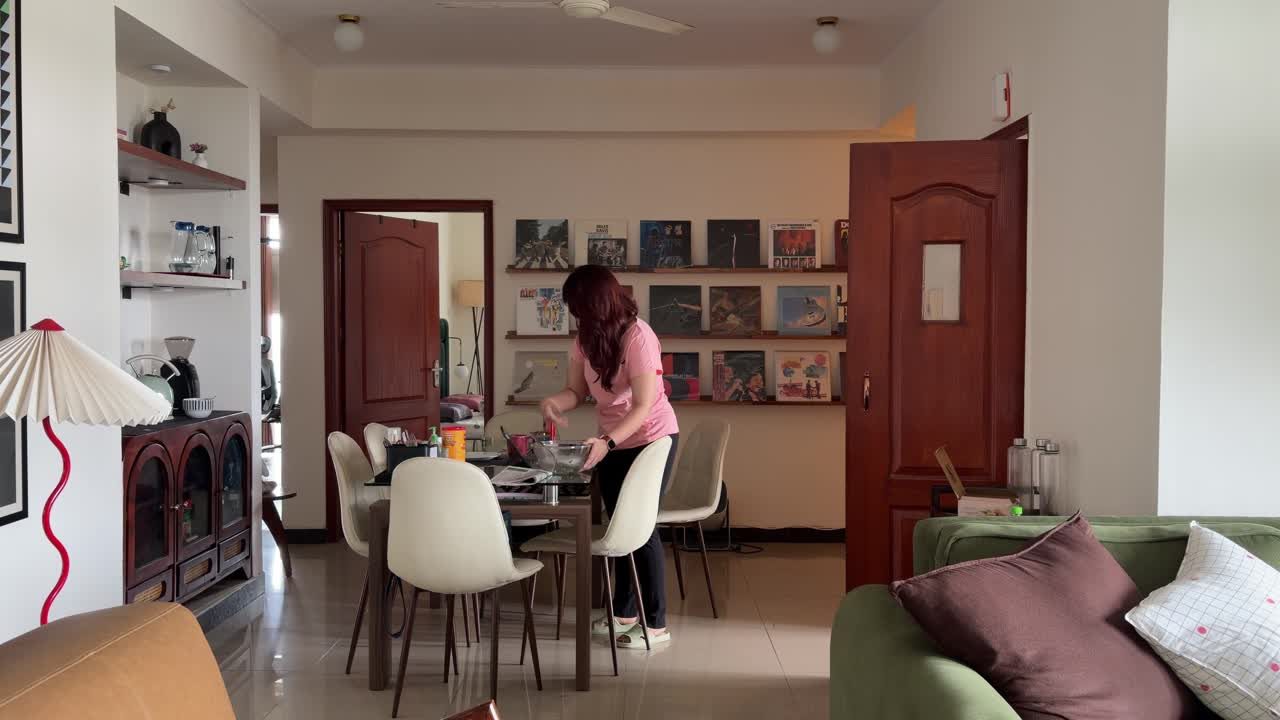
If you want a short, more deliberate starting point, try my 20-minute Trash Bag Therapy approach. A smaller action is much easier to begin than an imaginary afternoon when you finally feel ready to tackle everything.
I also pair activities when they fit comfortably together. I enjoy thinking through ideas while walking, and use a voice app to capture thoughts. Listening to a podcast while working out is another pairing I like. I don’t expect that to work for every combination; writing and listening to something demanding both compete for my attention.
4. Leave some capacity unused
This is the difficult bit: once you make room, resist immediately filling every inch of it. Otherwise, you’ve made life more efficient and rewarded yourself with more things to keep up with. Excellent. A promotion nobody applied for.
Whenever possible, I keep a do-nothing day in my week. Sometimes that means bed rotting. Sometimes the space absorbs unexpected work, lets me call my mum without watching the clock, or gives me time to think without making the thinking another deliverable.
I don’t manage this perfectly every week. But I want rest to have a place in the system, rather than treating it as a prize I can claim once every task is finished. Every task will never be finished. There’s always another one waiting politely outside the door.
Even if the empty time produces nothing, it’s still allowed to exist. You don’t need to turn your rest into a particularly convincing business case.
5. Decide where good enough is enough
I have a perfection problem. I’ve spent days refining how a client presentation looked, even though the real value was the idea inside it.
I still care about presentation. I just ask where another hour will improve the work. Sometimes it’s better spent thinking or crafting the words. It is rarely better spent moving one box two pixels to the right and then back again. A deeply familiar form of exercise for anyone who’s made slides.
These days, AI helps with some of that design work. I still need a point where I decide the result is good enough and put my attention back into the substance.
For a recurring task, try deciding what finished looks like before you begin polishing. Which parts need real care? What would make the result useful and ready? Once you’ve reached that point, stop reopening every little choice.
This is about being more selective with effort. Good work needs attention, and I don’t want to use all of mine on the unimportant tasks surrounding it.
Start with the part of your week that keeps needing rescue
You don’t need to implement five new systems at once. That would be a rather high-maintenance introduction to low-maintenance living.
Choose one recurring decision and give it a default. Or notice one purchase’s upkeep before committing. Make one routine smaller, leave a little space in the week, or set a stopping point for a task you keep polishing.
I still want a full life. I want the work, relationships and interests I care about. I just want fewer ordinary things to need rescuing every time I’m running on low battery.
Watch the full video
Resources mentioned in the video
If you’d like a small first step, get my free Trash Bag Therapy guide. For a declutter plan, weekend reset and maintenance framework, take a look at the Choose Calm System.
The video’s background reading includes Hartmut Rosa’s Social Acceleration, Miriam Glucksmann’s work on consumption work, Alex Soojung-Kim Pang’s Rest, and Herbert Simon’s A Behavioral Model of Rational Choice. These are the sources shared with the video; the examples above describe how I’ve approached my own routines.
Which part of your life becomes the first casualty of a busy week: meals, laundry, routines, or the bit where you were supposed to rest? Tell me in the comments. That’s probably a useful place to start.